
What NBI and its development partners discussed at Stockholm World Water Week — and the 19 action points
STOCKHOLM 25 August 2026 - At Stockholm World Water Week 2026, the Annual Strategic Dialogue between the Nile Basin Initiative (NBI) and its development partners highlighted three priorities: maintaining NBI as a platform for Nile cooperation, sustaining its work through a period of transition, and securing the financing needed to keep regional programmes and projects moving.
The discussion came at an important juncture for NBI. The organisation is managing a significant funding shortfall for its robust programme portfolio. At the same time, Nile Basin countries continue consultations on the future of NBI and the transition towards a Nile River Basin Commission following the entry into force of the Cooperative Framework Agreement (CFA) on 13 October 2024.
The Basin also faces growing pressures. Africa’s population is rising. Demand for food is projected to double by 2040. Energy demand could increase fourfold. Climate change is making water availability less predictable. Infrastructure, storage and monitoring systems also remain inadequate.
Against this backdrop, participants focused on six key issues.
1. Why the Nile cooperation platform needs to be protected
After 27 years of cooperation, NBI has built more than an institution. It has developed a regional platform for Nile Basin countries to share knowledge, build trust, identify opportunities and develop projects.
It also provides a space to address challenges that cross national borders.
Participants stressed the importance of preserving this platform, particularly at a time of institutional transition.
NBI Executive Director Dr Eng. Nestor Niyonzima made the case for continued support in direct terms:
“Today, I ask you to look at NBI not simply as an institution seeking funding: Look at us as an investment in the platform that makes regional solutions possible.
If that platform weakens, it is not only an institution that suffers. We risk losing the convening space, the technical capacity, the knowledge systems, the project pipeline and – most importantly – the trust that countries have built over 27 years.”
Ms. Julia Hannig of Germany’s Federal Ministry for Economic Cooperation and Development (BMZ) supported this message. She stressed that maintaining a common, inclusive platform for cooperation across the entire basin was paramount and warned that fragmentation would weaken the Basin.
2. Why NBI’s financing gap matters
NBI is managing a significant financing shortfall even as demand for regional cooperation and investment continues to grow.
There has been progress on Member State contributions. The share of expected national contributions received rose from 28 percent in the 2024–25 financial year to 71 percent in the 2025–26 financial year.
This improvement is encouraging. But it does not close the funding gap.
NBI is advancing an ambitious portfolio that covers water resources management, food security, climate resilience, hydropower and power interconnections, groundwater, water quality and dam safety.
Keeping this work on course requires predictable and diversified financing. It also requires adequate staffing capacity.
Long-standing development partners reaffirmed their support. These include GIZ/German Cooperation, the World Bank, Netherlands Government and UNEP-DHI. Participants also recognised the need to broaden partnerships and explore additional sources of financing including Global Water Partnership.
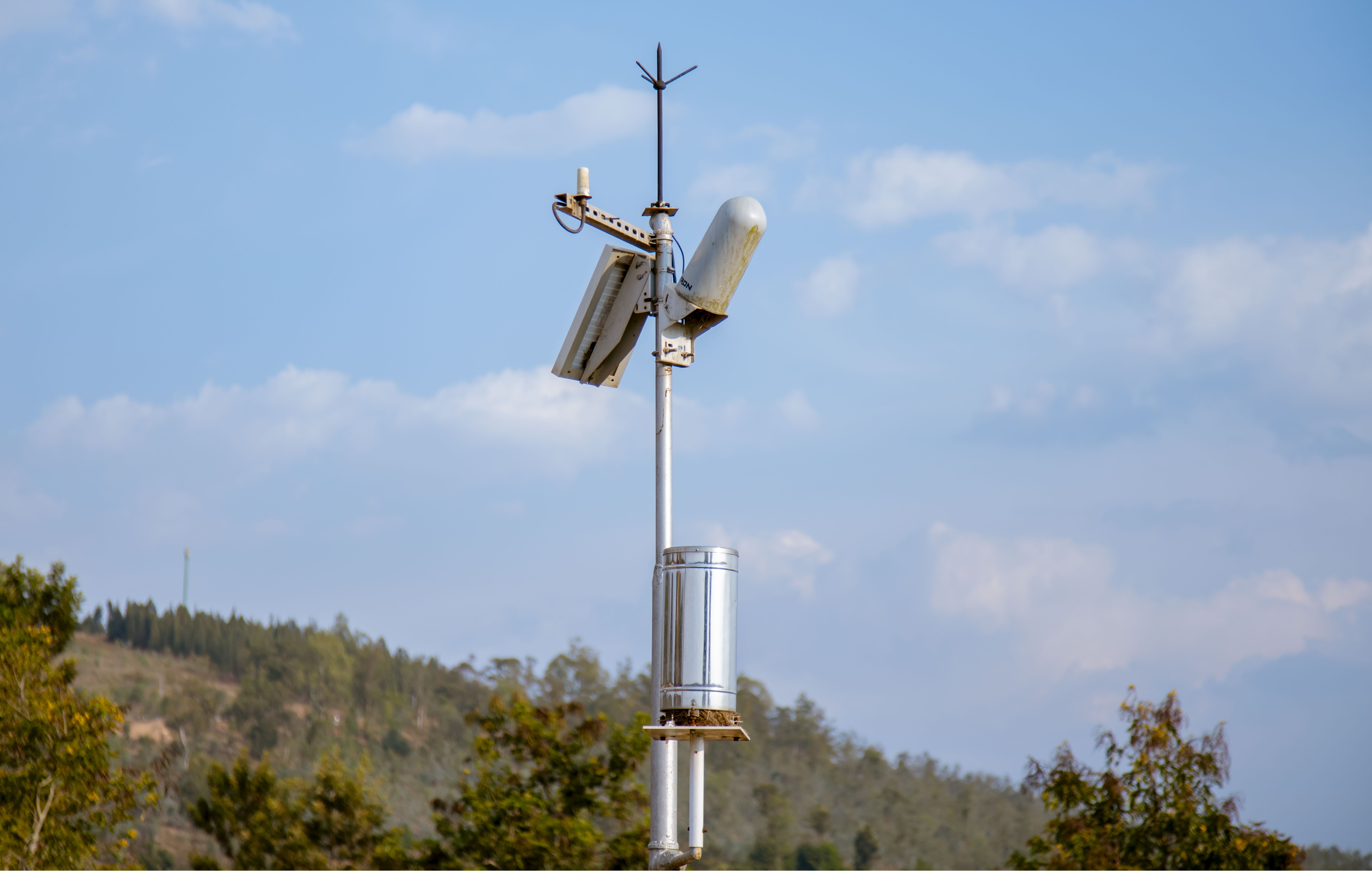
Part of the Regional Hydrological Monitoring System funded by EU & BMZ
3. Why strategic planning must continue during the transition
The transition towards a Nile River Basin Commission makes strategic planning more important, not less.
Participants, including delegates from Burundi, Egypt, Kenya, South Sudan, Sudan and Uganda, supported continued planning beyond NBI’s current strategic period.
A phased three-year planning approach was proposed. It would allow NBI to adapt to future institutional arrangements while aligning with the timeline of the Sustainable Development Goals.
The aim is to avoid a gap in planning, programming or cooperation during the transition.
Institutional arrangements may evolve. But the need for countries to cooperate on shared water resources, climate risks, development and investment will remain.
4. How NBI is protecting institutional memory
The discussion highlighted another important issue: preserving the knowledge and experience accumulated through nearly three decades of Nile cooperation.
NBI is using digital tools and knowledge systems to organise and preserve this institutional knowledge. These tools also make it more accessible to countries, policymakers and planners.
The proposed Nile Basin Digital Twin is one of NBI’s new initiatives. It would also help make technical knowledge, including the Strategic Water Resources Assessment (SWRA), more accessible and useful.
This is about more than technology. It is about ensuring that knowledge generated through years of regional cooperation remains available as institutions evolve.
5. Why Member State commitment and development partner support both matter
Sustainable Nile cooperation requires commitment from both Member States and development partners.
The rise in national contributions was welcomed. Countries were encouraged to continue moving towards meeting their full obligations.
Kenya’s Principal Secretary for Water and Sanitation Mr. Julius Korir, speaking on behalf of the Nile Council of Ministers Chairperson, reaffirmed Member States’ commitment to regional cooperation. He also acknowledged the contribution of development partners through financial resources, technical expertise and innovation.
Long-standing partners also reaffirmed their engagement. Their support provides an important foundation for NBI’s regional work.
6. What NBI’s project portfolio says about the opportunity ahead
The dialogue highlighted the breadth of NBI’s work and the opportunities that regional cooperation can unlock.
These range from power interconnections and multipurpose water infrastructure to groundwater monitoring, water quality, climate resilience, dam safety and digital water management.
Many of these investments require countries to work together for shared benefits. They also require technical preparation and substantial financing.
The challenge is therefore not a shortage of opportunities. It is ensuring that the financing, partnerships and institutional capacity needed to take them forward remain in place.
The 19 action points agreed for the way forward
The dialogue concluded with 19 action points covering NBI management, Nile cooperation, regional infrastructure and investment, climate resilience, dam safety and Member State commitments.
Eight priorities for NBI management
1. Advance the Nile Basin Digital Twin
Finalise and submit the concept to NBI’s governance structures for decision and possible implementation, to advance the Strategic Water Resources Assessment (SWRA).
2. Update NBI’s strategy beyond 2027
Develop a phased three-year planning approach aligned with the Sustainable Development Goals timeline and adaptable to the transition towards the Nile River Basin Commission.
3. Update the State of the Basin report
Update the report, last produced in 2020.
4. Advance implementation of the Nile Basin Management Plan at national level.
5. Expand groundwater monitoring
Install 23 additional data loggers in boreholes in Kenya, Ethiopia and Sudan. This will build on monitoring already established in Burundi, Rwanda, Tanzania and Uganda.
6. Address water quality challenges
Secure funding for the remaining 13 water quality stations and 41 water quality demonstration sites. The aim is to address rising environmental pollution and declining water quality across the Basin.
7. Advance the Centre of Excellence in Uganda
Issue a call to development partners for funding to support construction of the centre.
8. Continue developing strategic partnerships.
Two priorities for Nile cooperation
9. Advance the Nile River Basin Investment Programme
Conclude consultations on the Nile River Basin Investment Programme (NRBIP). The aim is to support resource mobilisation for studies and implementation.
10. Keep dialogue open on the Cooperative Framework Agreement
Continue consultations with Egypt, Sudan, Kenya and the Democratic Republic of Congo. The aim is to maintain dialogue and promote inclusivity.
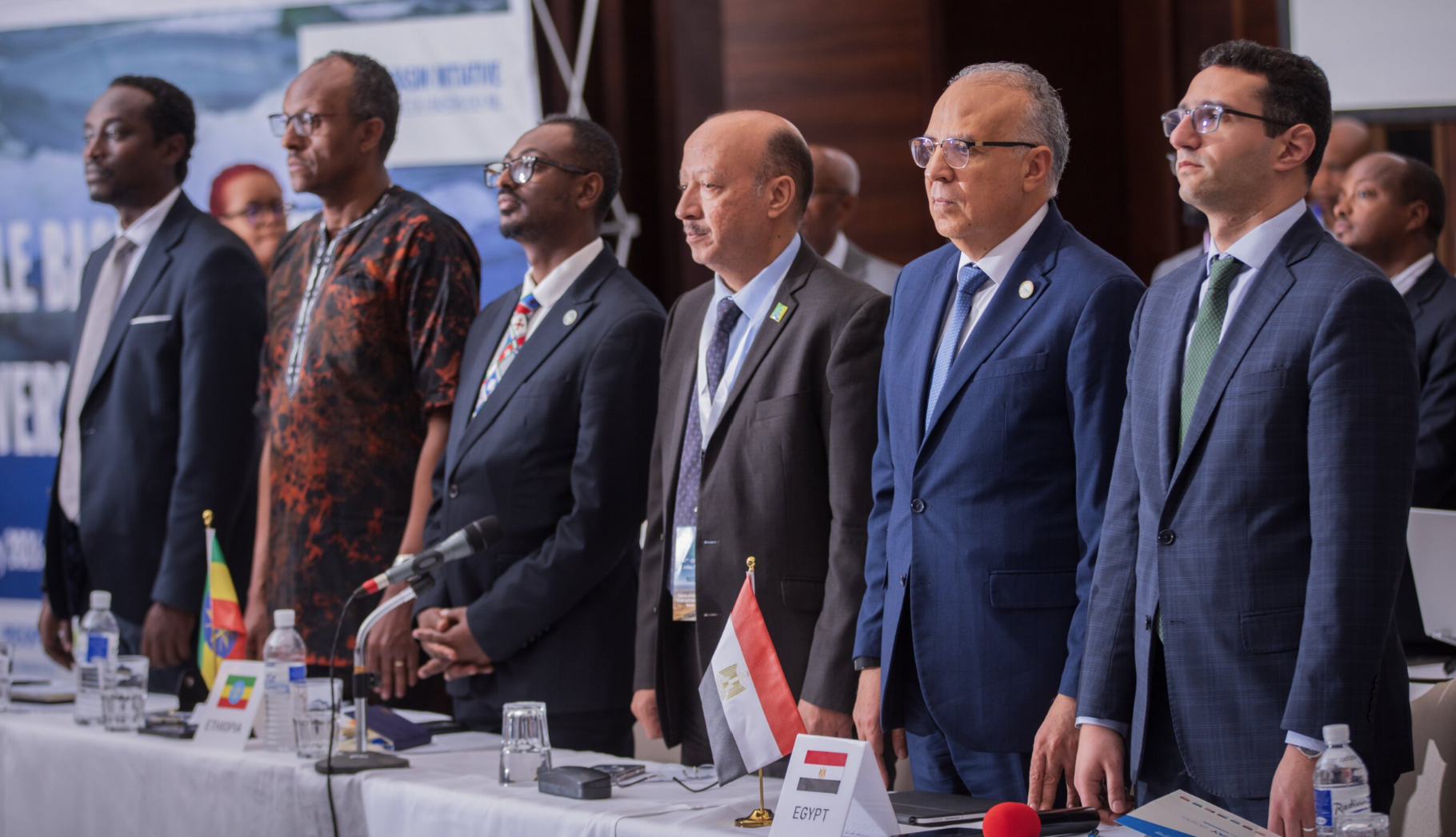

Juba, South Sudan in February 2026, one of NBI's engagements around the CFA and NRBIP
Five priorities for regional infrastructure and investment in the Nile Equatorial Lakes sub-basin
11. Close the Uganda–South Sudan Power Interconnection financing gap
Advance fundraising for the remaining US$30 million gap.
12. Finalise financing for the Uganda–DRC Power Interconnection Project
Secure financing for the DRC side, with the World Bank having shown interest in the Uganda side.
13. Advance the Angololo Multipurpose Water Resources Development Project
Support Kenya and Uganda in discussions with the African Development Bank to move the project into implementation.
14. Advance climate-resilient peatland development in the Kagera Basin
Continue engagement on the US$50 million, five-year proposal submitted to the Global Climate Facility.
15. Advance the Ruvyironza Multipurpose Water Resources Development Project
Move forward with the pre-investment study in Burundi, supported by the African Development Bank/African Water Facility.
Two priorities for climate resilience and dam safety in the Eastern Nile
16. Strengthen regional dam safety
Secure funding to fully operationalise the Regional Dam Safety Centre. This will include opportunities for young professionals to participate in dam safety activities.
17. Expand climate resilience programming
Continue and expand the Regional Climate Resilience Programme. This includes exploring a second phase to address flood and climate risks in additional countries such as Kenya, Uganda and South Sudan.
Two commitments for Nile Basin Member States
18. Increase country contributions
Continue increasing national contributions towards full obligations.
19. Support national implementation of the Nile Basin Management Plan.
Keeping Nile cooperation on course
The Stockholm dialogue reinforced a shared message: The Nile Basin has built significant institutional, technical and knowledge capital over nearly three decades. That foundation needs to be protected as countries consider the future of Nile cooperation and seek shared benefits across the Basin.
The Annual Strategic Dialogue brought together NBI Member States and development partners, including German government entities such as GIZ and BMZ, the World Bank, the United Nations Environment Programme (UNEP), DHI (Danish Hydraulic Institute) and the United States of America.
About the Nile Basin Development Forum
https://nilebasin.org/content/nbi-launches-fifth-nile-basin-media-awards