

Bridging the Power Pool: How NELSAP-CU Is Helping Build Eastern Africa’s Electricity Market.
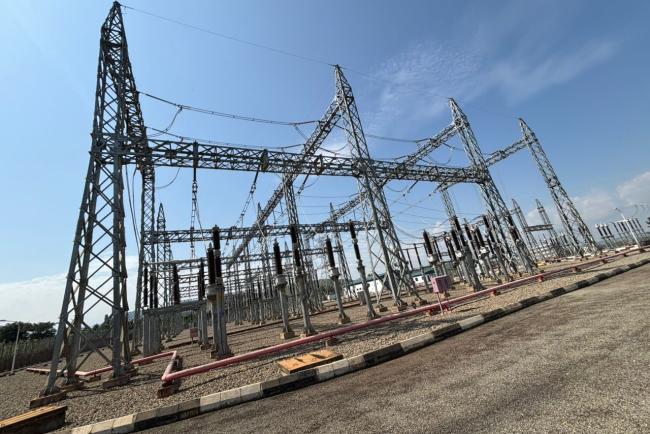
Eastern Africa is moving towards a future in which electricity generated in one country can be traded or wheel across borders and used hundreds or even thousands of kilometres away. But a regional electricity market cannot run on agreements and trading platforms alone. It needs the interconnector networks, substations and national grids capable of physically moving that power.
NELSAP-CU is contributing to this through the preparation and coordination of cross-border transmission infrastructure connecting countries within Eastern Africa and creating opportunities for electricity trade with Southern Africa.
This is the ambition behind the Eastern Africa Power Pool (EAPP): an interconnected regional electricity system through which countries can increasingly buy and sell power across borders. Much of this is captured under the Eastern Africa Power Pool Master Plan 2014 and are already under implementations.
According to Eng. Jacob Manyoun Deng, Power Program Engineer at NELSAP-CU, countries across the region are increasingly being connected through cross-border transmission infrastructure, with further interconnectors planned or under development. At the current pace of implementation, he projects more comprehensive regional electricity interconnectivity by 2045.
Several countries are already trading electricity across borders, including Ethiopia and Kenya, Uganda and Rwanda, Burundi, Rwanda and Tanzania, and Kenya and Tanzania.
These exchanges demonstrate why interconnectors matter. Beyond moving electricity, they create opportunities for countries to make better use of available generation, strengthen security of supply and expand regional power trade.
Connecting East and Southern Africa
The ambition extends beyond Eastern Africa. NELSAP-CU has also supported the preparation of transmission infrastructure intended to connect the Eastern Africa Power Pool with the Southern African Power Pool (SAPP).
One of NELSAP’s most significant power interconnection initiative is the Zambia–Tanzania–Kenya (ZTK) Power Interconnection, a 1,552-kilometre, 400 kV transmission corridor stretching from Isinya in Kenya, through Tanzania, towards Kabwe in Zambia.
The corridor brings together the Kenya–Tanzania and Tanzania–Zambia interconnections and is intended to enable power transfers between Eastern and Southern Africa. NELSAP-CU also supported preparation of the 400 kV Iringa–Mbeya transmission line in Tanzania, another section of this north-East–south transmission backbone.
Once fully interconnected, the infrastructure would provide a physical bridge between EAPP and SAPP, widening the area across which electricity can potentially be exchanged.
Connecting South Sudan to the regional grid
Another important connection is being addressed through the South Sudan–Uganda Power Interconnection Project (SUPIP), coordinated by NELSAP-CU on behalf of the two countries.
The planned interconnection will establish a physical electricity link between Uganda and South Sudan and provide South Sudan with access to the wider EAPP interconnected system.
“SUPIP represents more than a bilateral transmission link. It is a strategic building block for achieving a fully interconnected Eastern African electricity market, enhancing regional energy security, system stability and electricity trade,” explains Eng. Jacob.
Once connected, South Sudan could access electricity from other interconnected countries and, as its own generation capacity develops, potentially export electricity into the regional system.
From transmission lines to electricity trading
Building the lines, however, is only part of the equation. The EAPP is working towards operationalizing a Day-Ahead Market, which would allow participating utilities to buy and sell electricity for delivery the following day.
For NELSAP-supported projects such as SUPIP, this emerging market means an interconnector must be ready not only to carry electricity, but to support scheduled and reliable cross-border transactions. This requires synchronized grids, coordinated protection and control systems, reliable SCADA and communications, accurate cross-border metering, sufficient transmission capacity, and harmonized grid codes and operating procedures.
As Eng. Jacob explains, these systems will be essential for SUPIP, which forms part of the North – South Electricity Highway, to support scheduled electricity flows between Uganda and South Sudan and enable South Sudan to participate effectively in the wider EAPP market.
Eastern Africa is therefore not yet one electricity market, but important pieces are falling into place: countries are already trading electricity, cross-border infrastructure is expanding, and the mechanisms for a more organized regional market.