
NBI pilots demonstrate solution to water scarcity in the Nile Basin
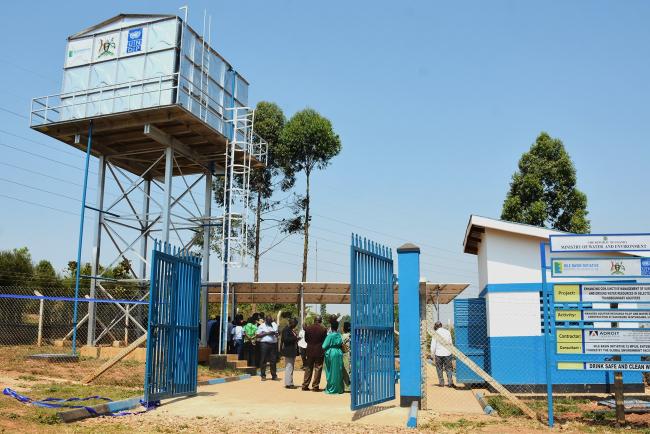
Building on findings from NBI's Strategic Water Resources Analysis (SWRA), the pilots demonstrate how the combined use of surface water and groundwater through Managed Aquifer Recharge can help the Nile Basin respond to growing water scarcity under climate change.
Turning strategic analysis into practical action
As populations grow, economies expand and climate change intensifies, the Nile Basin faces increasing pressure on its finite water resources. To help countries respond, the Nile Basin Initiative (NBI) is translating the findings of its Strategic Water Resources Analysis (SWRA) into practical action through pilots on the conjunctive management of surface water and groundwater.
Across five pilot sites in four Nile Basin countries, NBI is demonstrating how Managed Aquifer Recharge (MAR) can improve understanding of the interaction between surface water and groundwater. The pilots are generating evidence to support more sustainable and climate-resilient water resources management across the Basin.
The pilots form part of NBI's broader effort to help Member States prepare for a future in which climate change, population growth and economic development will place unprecedented pressure on the Basin's shared water resources.

Funded by the Global Environment Facility (GEF) through the United Nations Development Program (UNDP), the initiative, “Enhancing Conjunctive Management of Surface and Groundwater Resources in Selected Transboundary Aquifers in the Nile Basin”, is testing the approach in different hydrogeological settings. The aim is to generate practical lessons that can inform future policies and investments across the Nile Basin.
Responding to a growing water supply challenge
Since 2015, NBI has undertaken two phases of the Strategic Water Resources Analysis to assess how to enhance water supply to meet growing demand for development across the Nile Basin.
The analysis projects that, if countries pursue their development plans independently and without greater cooperation, demand for water could exceed available supplies by 2050. One scenario estimates that the Basin could require the equivalent of one-and-a-half Nile Rivers to meet future water demands.
The SWRA identified several complementary options for narrowing the gap between water demand and supply. These include improving water-use efficiency, optimising regional cropping patterns, expanding trade in virtual water, increasing water reuse and desalination where appropriate, and strengthening the conjunctive use and management of surface water and groundwater.
The MAR pilots translate this recommendation into action. They demonstrate how surface water and groundwater can be managed conjunctively through MAR and other groundwater recharge and storage techniques to improve water availability throughout the year.
Generating knowledge for the entire Basin
Groundwater already plays a critical role in meeting domestic, agricultural and industrial water needs across the Nile Basin, particularly during dry periods. Yet the interaction between surface water and groundwater remains insufficiently understood. Meanwhile transboundary aquifers lack coordinated management mechanisms.
Before implementing the pilots, NBI completed Shared Aquifer Diagnostic Analysis of three sites in the Basin. The analyses provided foundational knowledge on shared groundwater systems, addressing a long-standing information gap that had constrained countries' ability to develop coordinated approaches for managing shared aquifers.
Building on this knowledge base, NBI established the five Managed Aquifer Recharge pilot sites in transboundary aquifers to generate scientific evidence and operational experience that will benefit all Nile Basin countries.
Each pilot system includes recharge structures, transmission pipelines, water storage tanks, solar-powered pumping systems, treatment units and groundwater monitoring equipment, including piezometers that collect data on groundwater levels. The information generated will strengthen understanding of how conjunctive water management can enhance water availability and support sustainable water resources management across the Nile Basin.
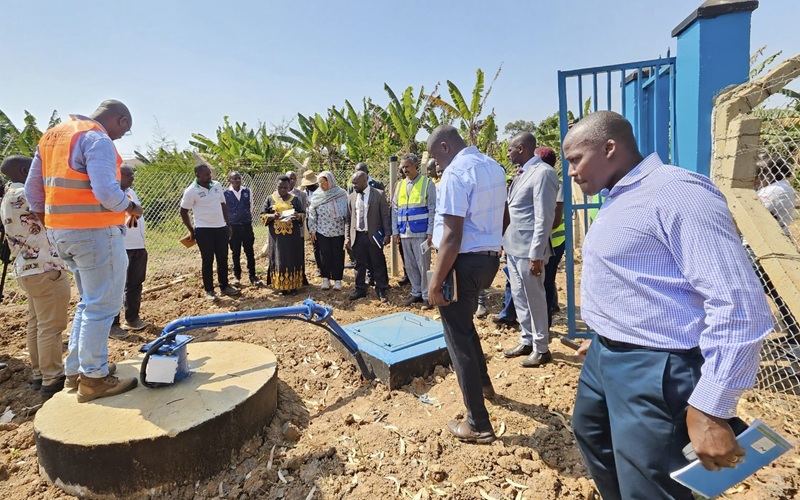
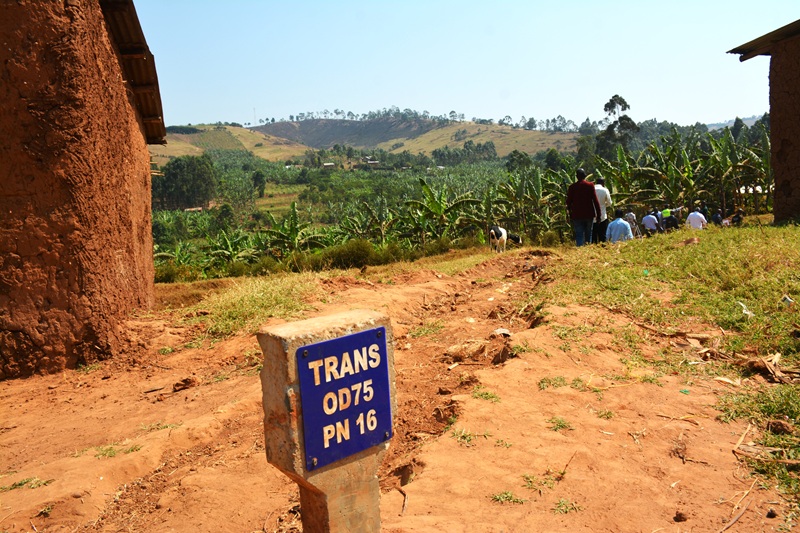
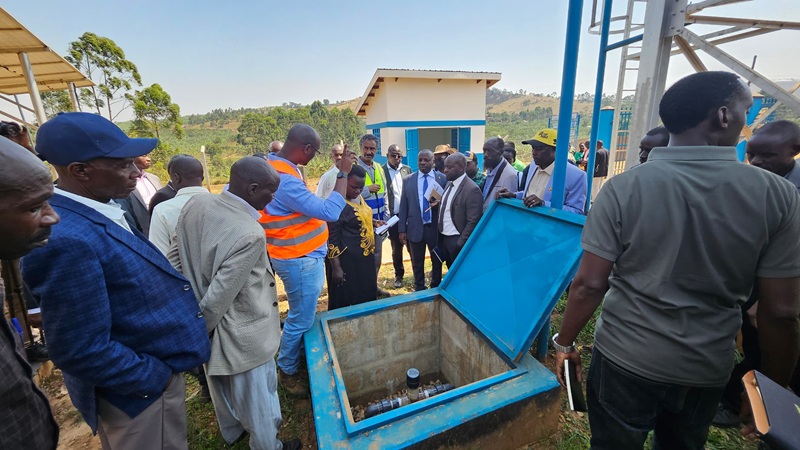
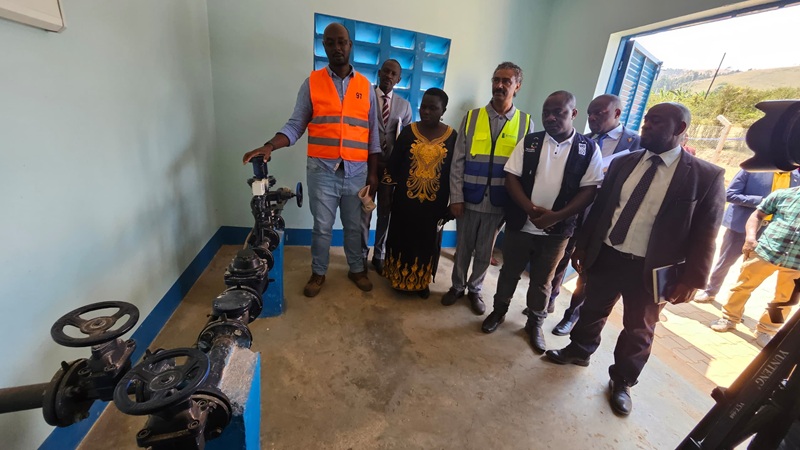
Components of the MAR system at one of the Uganda pilot sites, including (from top) a water production borehole, transmission line, chlorination unit and a pumphouse control unit
Beyond the physical demonstration sites, NBI has developed a basin wide groundwater database that is accessible to Member States through the institution’s Integrated Knowledge Portal. Going forward, the database will deliver more benefits to countries. It will integrate groundwater information with data from 43 groundwater monitoring stations, surface water monitoring stations and meteorological observations including rainfall and temperature. Together, these data will provide near real-time information on groundwater and surface water availability. This will strengthen the evidence base for future Strategic Water Resources Analysis and water resources planning across the Basin.
NBI has also developed operations and maintenance manuals for government agencies responsible for managing completed pilot sites. The manuals support long-term operation of the systems, strengthen institutional capacity and help ensure the sustainability of Managed Aquifer Recharge beyond the life of the project.
While the pilot sites also provide reliable water supplies for nearby communities, these local benefits are part of a broader objective: generating knowledge, evidence and practical approaches that can be adapted and scaled across the Basin.
From cooperation to climate resilience
NBI's Head of the Basin wide Program and Deputy Executive Director, Dr Abraha Adugna, said the pilots demonstrate how regional cooperation can transform strategic analysis into practical solutions.
"The Strategic Water Resources Analysis tells us what the future could look like if we continue with business as usual. These pilots show how cooperation and innovation can help change that future. We are not simply building pilot systems; we are generating the evidence countries need to make better decisions for the entire Nile Basin."
Building a pathway for basin wide scaling
NBI has completed MAR pilot systems in Uganda within the shared Mt Elgon and Kagera aquifers. Additional pilot sites in Burundi, Kenya and Rwanda are expected to be completed in the coming months.
Building on the evidence generated during this first phase, NBI is preparing a second phase of the initiative. It will focus on scaling Managed Aquifer Recharge across the Nile Basin while strengthening knowledge sharing, institutional capacity and the application of conjunctive management approaches.
Going forward, NBI will prioritize the generation and sharing of lessons and good practices from the pilots through scientific knowledge products, technical exchanges and human-centred stories. These efforts will ensure that evidence generated through the initiative is accessible, informs decision-making and supports the scaling of conjunctive water management approaches across the Nile Basin.
The conjunctive management of surface water and groundwater initiative demonstrates NBI's role as a regional platform for generating knowledge, testing innovative approaches and supporting Member States with practical solutions to shared water challenges.