
A Basin in Transition: Key Outcomes and Policy Implications from Regional Forum for Hydrologists
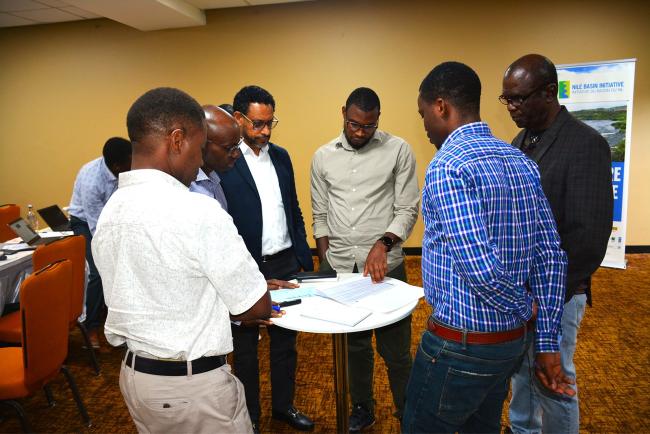
The Nile Basin Initiative (NBI) convened the 4th Technical Session of the Regional Expert Working Group on Hydrology Annual Forum in Kampala, Uganda from 1–5 June 2026, bringing together representatives from Burundi, Democratic Republic of Congo, Ethiopia, Kenya, Rwanda, South Sudan, Sudan, Tanzania, and Uganda, alongside regional and international partners.
The Forum provided an opportunity for Member States, technical experts, and partners to reflect on progress achieved under Phase II of the BMZ/GIZ-supported Nile Basin Regional Hydrological Monitoring System, demonstrate the value of regional hydrological cooperation, and shape priorities for Phase III (2026–2029).
Through country experiences, technology demonstrations, and working group discussions, the Forum highlighted an important transition: the value of hydrological cooperation is increasingly measured not only by the monitoring systems and datasets established, but by how effectively information supports decisions on floods, water resources management, hydropower operations, drought monitoring, and community resilience.
Outcome 1: Regional cooperation has strengthened national hydrological services
A key message from Member States was that the Nile Basin Regional Hydrological Monitoring System has become a backbone for strengthening national hydrological services and improving access to reliable information for decision-making.
Over Phase II, NBI-supported regional monitoring infrastructure, technical support, and knowledge exchange strengthened national capacities by improving observation networks, data sharing, forecasting capability and access to regional hydrological information.
Experiences from across the Basin demonstrated how regional cooperation translates into national value. Uganda highlighted how NBI-supported monitoring stations have become important assets within national water resources management applications, supporting hydrological monitoring, forecasting, and planning. South Sudan demonstrated how regional cooperation has supported the strengthening of national hydrometeorological systems and coordination of cascade dams while contributing to humanitarian planning and disaster response coordination.
Ethiopia highlighted the value of jointly generated seasonal hydrological outlooks and advisories in strengthening knowledge exchange and transboundary cooperation. Kenya demonstrated how hydrological information supports national monitoring, flood assessment, and water resources planning, while Tanzania highlighted the contribution of regional monitoring stations to Lake Victoria Basin management.
Burundi’s experience demonstrated the importance of sustained technical support and maintenance arrangements in strengthening national hydrometeorological services. Sudan highlighted the resilience of well-designed monitoring infrastructure, particularly the importance of remote access to data during periods when physical access to stations is restricted.
Together, these experiences illustrated a central benefit of cooperation: countries are not only sharing data, but strengthening each other’s ability to generate, interpret, and use hydrological information.
Policy implication:
Sustained investment in regional cooperation mechanisms remains essential. Shared monitoring systems deliver greater value when they are embedded within national institutions, supported through predictable operation and maintenance arrangements, and connected to decision-making processes.
Outcome 2: Hydrological information is increasingly supporting early warning and operational decisions
The Forum highlighted continued progress in producing and applying regional hydrological information products, including seasonal hydrological outlooks and flood advisories.
Eight consecutive flood advisories issued during Phase II strengthened cooperation among Member States and improved collective understanding of climate-related risks across the Basin. These products have provided a foundation for national institutions to prepare for and respond to extreme events.
Member State experiences showed how regional information is increasingly translating into action. South Sudan, Ethiopia, and Rwanda and Uganda highlighted the importance of hydrological information for early warning, disaster preparedness, and coordination along shared river systems.
Rwanda demonstrated how hydrological information is increasingly connected to emergency management systems, including citizen-based flood hotspot monitoring approaches. Ethiopia highlighted how information flows through disaster management structures to support preparedness.
The Regional Rusumo Falls Hydroelectric Project provided an important example of how hydrological cooperation can support infrastructure operations. Through collaboration between Rusumo Power Company Ltd, NBI, and the national hydrological services of Burundi, Rwanda, and Tanzania, hydrological monitoring has supported improved operational planning and demonstrated the potential role of sector users in contributing to the sustainability of monitoring systems.
Policy implication:
The value of hydrological information depends on its use. Future efforts must strengthen the pathways that connect forecasts, advisories, institutions, infrastructure operators, and communities.
Outcome 3: Member States identified priorities for the next phase through collective problem-solving
The Forum’s working groups provided a platform for Member States to identify practical priorities for Phase III.
Discussions focused on sustaining the regional monitoring system, improving hydrological information products, increasing the impact of the regional system, strengthening data management, and establishing community-based flood early warning systems.
Member States emphasized the need for sustainable financing, stronger operation and maintenance arrangements, improved information products, and stronger links between regional systems and national users.
The discussions reinforced a common message: a monitoring system creates value only when it is maintained, trusted, understood, and used.
Policy implication:
Phase III priorities should continue to be shaped through Member State ownership and practical experience, ensuring that regional solutions respond to national realities.
Outcome 4: Partnerships and digital innovation are expanding the impact of Nile Basin hydrological cooperation
The Forum demonstrated that strengthening hydrological resilience requires collaboration beyond national institutions and increased use of digital solutions that transform data into decisions.
NBI’s partnerships with the World Meteorological Organization (WMO), Intergovernmental Authority on Development Climate Prediction and Applications Centre (ICPAC), Deutsche Gesellschaft für Internationale Zusammenarbeit (GIZ), Lake Victoria Basin Commission (LVBC), Nile Basin Discourse (NBD), and International Water Management Institute (IWMI) continue to support different dimensions of the regional agenda.
WMO collaboration supports alignment with global hydrological standards, data management approaches, and initiatives such as Early Warning for All. ICPAC strengthens links between climate information, seasonal forecasting, and regional early warning. NBD supports community engagement and citizen science approaches.
IWMI’s collaboration on the Nile Basin Digital Twin represents a significant step towards transforming how basin information is accessed, analysed, and applied. By connecting hydrological data, modelling tools, and digital platforms, the Digital Twin improves visibility of basin conditions, supports scenario analysis, and enables more informed decisions by both technical experts and non-specialists. It complements the Nile Basin Regional Hydrological Monitoring System by strengthening the pathway from data generation to evidence-based decision-making.
The Forum reflected progress against recommendations from an independent technical review commissioned by NBI in 2022, which called for increased use of automated, cloud-based, and integrated platforms that improve real-time visibility of basin conditions and support decision-making through shared understanding and consensus.
Policy implication:
The future of basin management will depend on combining strong institutions, reliable monitoring systems, and digital innovation. Continued investment in integrated information platforms will be critical for turning shared data into shared decisions.
Looking ahead: Phase III will focus on turning information into action
The Forum endorsed the GIZ-funded Phase III (2026–2029) Action Plan, shifting emphasis from strengthening monitoring foundations to maximizing the impact of hydrological information.
Key adopted action areas include:
- establishing sustainable financing mechanisms, including a Hydromet Operations and Maintenance Fund, and strengthening NBI’s coordination role for regional stations;
- expanding community-based flood early warning systems and strengthening links between regional forecasts and national systems under the Early Warning for All (EW4All) initiative;
- improving data management through stronger standards, cybersecurity, backup systems, and enhanced information-sharing protocols;
- integrating Earth Observation, GEOGLOWS, GLOFAS, and satellite-derived products into routine hydrological monitoring and forecasting;
- strengthening regional capacity through training, peer learning, expert networks, and innovative technologies;
- addressing vandalism through stronger guidelines, community ownership approaches, and improved infrastructure protection;
- expanding partnerships and co-financing approaches to sustain regional hydrological services.
The Annual Forum confirmed that the Nile Basin Regional Hydrological Monitoring System has become a critical foundation for flood forecasting, drought monitoring, hydropower operations, water resources planning across sectors, and transboundary cooperation.