
Five Things Nile Countries Benefited from Training on a New Water Modelling System
Nile Basin countries are strengthening their ability to assess Nile River Basin Investment Program (NR-BIP) projects and improve water planning and climate resilience following a regional training that introduced experts to an upgraded water modelling system.
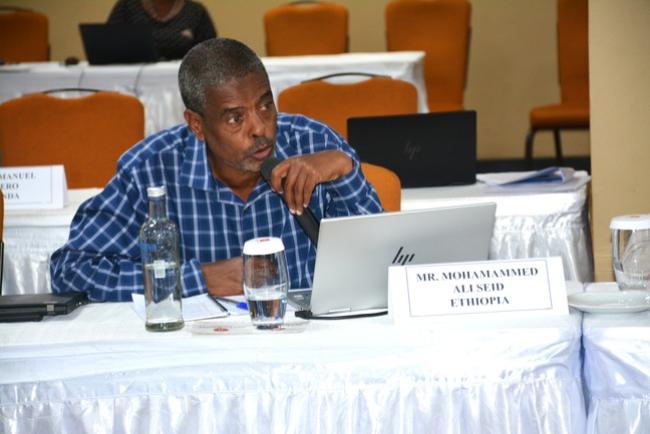
The five-day regional modelers’ capacity building workshop, held in Kampala from 8–12 June 2026, brought together members of the Strategic Water Resources Analysis (SWRA) modelling technical working group drawn from Burundi, Ethiopia, Kenya, Rwanda, Sudan, South Sudan, Tanzania and Uganda, alongside selected NBI staff.
The training introduced participants to the latest version of the TALSIM model, incorporated NR-BIP projects into the modelling system, and provided practical experience in applying climate change scenarios to assess how investments can perform under future conditions.
The SWRA was launched by the NBI Secretariat in 2015 to support sustainable development and management of Nile Basin water resources. It provides a shared analytical foundation for countries to understand future water demands, assess development options and strengthen cooperation in managing shared water resources.
Since 2018, SWRA Phase II has focused on updating basin data, improving water demand projections, testing future scenarios, and identifying strategic options for narrowing the gap between available water resources and growing demands.
Following recommendations from the Nile Basin Technical Advisory Committee in 2023, NBI, with support from GIZ, conducted a series of capacity building sessions on the SWRA toolbox. The latest training focused on applying the upgraded system to Basin-wide investments and climate-proofing approaches.
The training delivered five key benefits for Nile Basin Member States:
1. Access to a new and improved water modelling system
Participants were introduced to the latest version of the TALSIM model, featuring an improved interface and enhanced usability. The upgraded system will help countries apply water modelling more effectively for planning and analysis.
2. Improved ability to assess NR-BIP projects
Experts learned how to incorporate Nile River Basin Investment Program projects into the modelling framework and evaluate their performance under different development and climate scenarios.
3. Stronger capacity to plan for climate change impacts
Participants gained practical knowledge on selecting and applying climate change scenarios, helping strengthen climate-proofing of future water resources investments.
4. Enhanced national modelling skills
Through hands-on exercises, regional experts strengthened their ability to use the upgraded toolbox and apply the knowledge within their respective institutions, contributing to stronger water resources analysis across the basin.
5. A foundation for digital access to water resources information
The upgraded modelling system will support integration of SWRA outputs into the planned Nile Basin Digital Twin, helping make water resources information and analysis more accessible and useful to decision-makers, researchers and stakeholders.
Speaking during the closure of the workshop, representatives including from the Nile Technical Advisory Committee (Nile-TAC) and funding partner GIZ encouraged participants to take ownership of the knowledge and tools developed and communicate their value within their institutions.
NBI Executive Director Dr Nestor Niyonzima highlighted the importance of ensuring that the knowledge generated through the training translates into practical applications that support better water resources planning and decision-making across the basin.
“The value of this training goes beyond the tools introduced. It is about ensuring that the knowledge and capabilities developed are applied within our institutions and shared across the Nile Basin to strengthen our collective ability to plan, analyze and respond to future water challenges.”
The training marks an important step towards strengthening evidence-based planning, supporting climate-resilient investments and enhancing cooperation among Nile Basin countries in managing shared water resources.
Story and Images, Lydia Wamala