
Nile Day 2026 in Juba Highlights Over US$1.6 Billion in Regional Investment Benefits
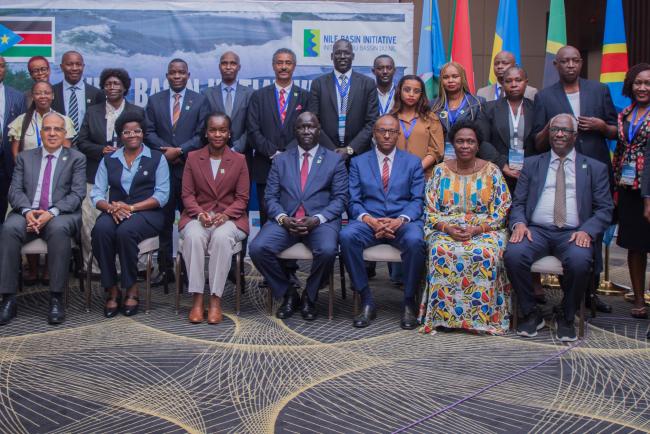
The successful celebration of Nile Day 2026 in Juba marked more than a symbolic gathering of Nile Basin countries it highlighted the tangible development gains emerging from regional cooperation.
Hosted for the first time by South Sudan since joining the Nile Basin Initiative (NBI) in 2012, the event coincided with high-level governance meetings and brought together ministers, technical experts, development partners, and stakeholders from across the Basin.
Today, the Nile Equatorial Lakes region’s active and pipeline portfolio exceeds US$1.6 billion in transboundary investments across energy, water resources, and climate resilience, a reflection of sustained political commitment and growing development partner confidence.
Among the flagship achievements highlighted during the celebrations was the 80 MW Regional Rusumo Falls Hydroelectric Project, jointly owned by Burundi, Rwanda, and Tanzania. Delivered through approximately US$540 million in coordinated financing, the project is now fully operational, supplying renewable electricity equally to the three countries and strengthening regional grid stability.
In addition, the US$30 million Nile Cooperation for Climate Resilience programme, implemented across 10 Nile Basin countries, has strengthened flood and drought early warning systems and enhanced shared hydrological data helping countries shift from reactive disaster response to preventive climate risk management.
Regional power integration continues to advance. The 400 kV South Sudan–Uganda Power Interconnection, valued at over US$260 million, is progressing toward implementation, enabling bulk power trade and improved electricity reliability for communities, schools, and health facilities. Other interconnections and multipurpose water projects, including Angololo, Akanyaru, and Nyimur/Limur, remain central to expanding irrigation, water supply, and watershed protection across borders.
In his keynote remarks during the media briefing, Hon. James Mawich Makuach, Minister of Water Resources and Irrigation of South Sudan, described the moment as historic and reaffirmed his country’s commitment to cooperation.
“The Nile is not just water flowing through our land, it is opportunity flowing toward our future. Through cooperation, we are turning shared waters into shared prosperity,” he stated.
The Regional Coordinator of NELSAP-CU emphasized the importance of sustained implementation momentum.
“Regional cooperation must translate into real infrastructure and measurable impact. From joint hydropower development to strengthened climate resilience systems, we are turning dialogue into delivery,” he noted.
South Sudan’s hosting of Nile Day was particularly significant given that nearly the entire country lies within the Nile Basin and includes the Sudd wetland one of the largest freshwater ecosystems and carbon sinks globally. Strengthened flood preparedness, hydrological monitoring, and coordinated basin planning remain critical for protecting lives and livelihoods.
As Nile Day 2026 concluded, the message from Juba was clear: cooperation in the Nile Basin is increasingly defined by implementation, investment, and results. With over US$1.6 billion in projects advancing across the region, the focus now turns to accelerating delivery and ensuring that shared water resources continue to generate shared benefits for member states.