
From underground, NBI Delivers Water that Works for Women and Builds Cooperation
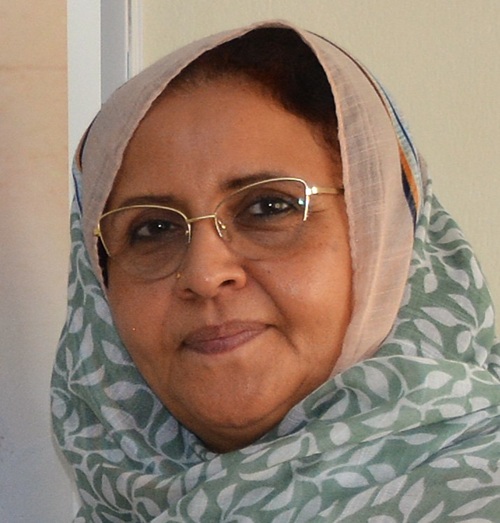
Across five Nile Basin countries, NBI’s groundwater pilots are demonstrating scalable solutions that can bring water closer to communities, unlocking opportunities for women while strengthening cooperation on shared aquifers. An interview with the Regional Project Lead, Dr Maha Abdelraheem Ismail.
Q: World Water Day 2026 focuses on “Water and Gender”. How does this relate to your work?
Groundwater is fundamentally a gender issue. Across Africa, from Uganda to Chad, Mali and Niger, it is women who fetch water, often spending up to a quarter of their day on this task. This reflects inadequate services. The time lost limits women’s ability to earn income, improve livelihoods and acquire new skills, placing them at a disadvantage compared to men. In most households, Men use water after it comes to the house. They don’t go out looking for it. Where groundwater services are weak, women’s economic status is typically lower. Improving access is therefore not just a water issue; it is an equality issue.
Q: What progress has been made so far?
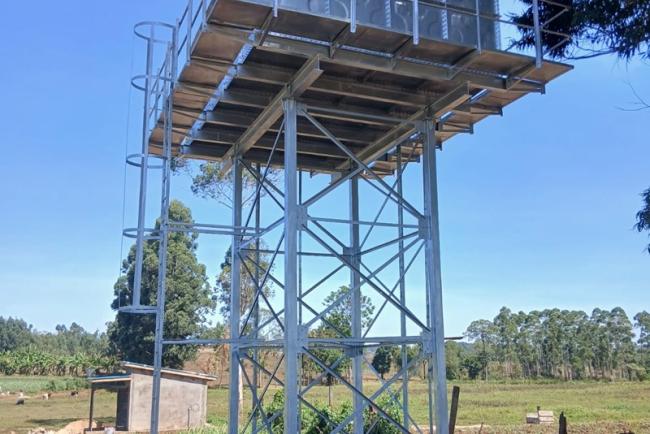
Under its groundwater project, the Nile Basin Initiative (NBI) is implementing pilot interventions in Burundi, Kenya, Rwanda, Tanzania and Uganda, focusing on the Kagera and Mt Elgon shared aquifers. The project has installed water storage tanks with a capacity of up to 60 cubic metres (60,000 litres), located within 500 meters of targeted communities. This significantly reduces collection time, with a jerrycan of water now filled in under three minutes. Planned expansion to Ethiopia and Sudan in the Gedaref–Adigrat aquifer, has been constrained by insecurity.
Q: What benefits has this work delivered for Nile cooperation?
From the outset, the project brought together scientists from across the basin through Shared Aquifer Diagnostic Analysis (SADA). This created a strong network for peer learning, knowledge exchange and collaboration.
In the Kagera aquifer (Burundi, Rwanda, Tanzania and Uganda), this cooperation led to a practical regional action plan built on three pillars:
- knowledge and data sharing
- institutional frameworks for transboundary water governance
- capacity building
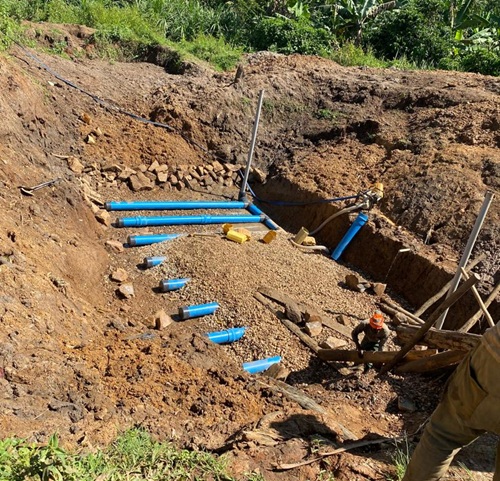
But you cannot build capacity without providing the necessary tools for people to carry out their work. So, we set up a regional monitoring system on the Kagera, where we drilled 20 boreholes fitted with data loggers. The information from the loggers will be processed in a data system we set up in addition, and reports will be generated on a regular basis to enable evidence-based decision making in the four countries.
Q: How are you advancing SDG 6 (Clean Water and Sanitation) and what is NBI's comparative advantage in your work?
A: NBI contributes directly to SDG indicators 6.5.1 and 6.5.2 on transboundary water cooperation. When we create a platform for exchanging knowledge and data and experiences, we are facilitating cooperation for best practices and success stories. This improves the situation of drinking water and sanitation for the well-being of citizens of the Nile Basin. Through NBI’s managed aquifer recharge (MAR) pilots, benefits are materializing right in front of communities.
On the comparative advantage, many regional agencies provide data, in addition to NASA and open sources. What NBI does uniquely is bringing people and countries together. This dialogue builds trust improves mutual understanding and supports joint solutions.
Q: NBI is essentially a knowledge agency. As is the Groundwater project. What new information, lessons, data are emerging from your pilot so far?
We have seen a need to manage water holistically and in an integrated manner. For example, we can, for example, combine surface and groundwater or sea water with surface water – that is, of course, after desalinization (a process of removing salt and other minerals from seawater or salty groundwater to make it safe for drinking, irrigation, or industrial use). Integrated approaches will enable countries meet the rising demand for water as populations move to urban areas. Historically, reliance on surface water alone has pushed resources such as rivers and lakes towards over-exploitation. The MAR technology being piloted demonstrates holistic and integrated use of water.
Q: What technical challenges are you facing in the on-going pilots?
A major challenge is the lack of reliable, quality-assured data. Much of the available information is generic, with limited regular monitoring. We often need to work backwards – examining the data, then validating it, then quality assuring it. Site selection was also difficult due to the absence of inventories identifying areas suitable for conjunctive use of surface and groundwater or MAR application. As a result, the team relied on satellite imagery and secondary data, which slowed implementation. Additional challenges included land ownership issues and the need to build understanding among local authorities.
That said, we got capable contractors and resident engineers.
Q: So, what in NBI’s work has helped move the stone, considering all the institutional faults?
The project has highlighted important regulatory gaps. For example, while Uganda has relatively strong surface water regulation, groundwater governance remains underdeveloped. The pilots revealed the absence of guidelines for drilling, equipment standards and geophysical investigations. Bringing these gaps to light is an important step towards strengthening national frameworks.
Q: How does your pilot/project relate with others at NBI?
All NBI programs are designed to support transboundary water development through cooperation. The groundwater pilots complement this by strengthening understanding of shared aquifers as critical resources for water security and climate resilience.
Q: What are the next steps after this pilot and for the project?
NBI is working to scale up the project, with plans to extend activities to the Rift Valley and the Sudd Basin. Existing data from initiatives such as the Horn of Africa and DYNOBA projects provides a strong foundation for this expansion. For current pilots, the priority is to establish robust operation and maintenance systems to ensure long-term sustainability.
Q: Do you have any closing reflections?
Groundwater often receives less attention than surface water (from lakes or rivers), partly because it is less visible and less politically prominent than large infrastructure such as dams. Yet its importance is clear. In Kampala, for example, approximately 43% of water use comes from groundwater. In Entebbe, only one treatment plant exists (for surface water); much of the remaining supply relies on groundwater.
NBI is grateful for funding from the Global Environment Fund (GEF) and the United Nations Development Program (UNDP).