
How a Modernised Landing Site on Lake George Transformed Lives through the Nile Basin Initiative
On Lake George in western Uganda, a once-neglected landing site has been transformed with funding from the African Development Bank. Fish is cleaner, profits are rising – especially for women – and the lake is better protected. The community has shaped this change throughout.
Anywhere in Uganda, fish landing sites are rarely associated with good hygiene. Mahyoro landing site was no exception when the Government of Uganda arrived in 2017, assessing potential sites for upgrading under the LEAF II project.
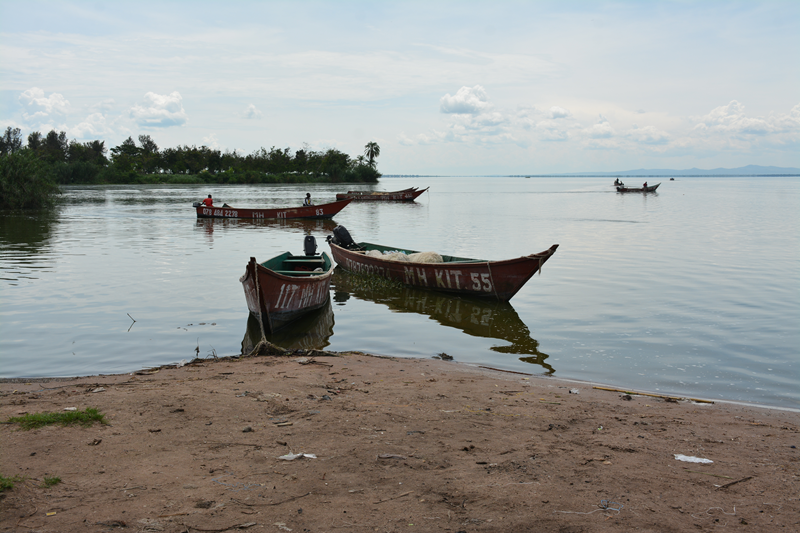
At the time, only 40 licensed boats operated at Mahyoro. The landing bay was a sprawling, unguarded expanse, where fishermen washed their catch directly in the lake or on bare ground. Losses were high due to bacterial contamination linked to poor hygiene. Fish stocks were low, and incomes uncertain.
Mahyoro was selected out of three landing sites on Lake George because it was the largest, busiest and most in need of rehabilitation — yet it still generated revenue for both Government and traders across three neighbouring districts, Kamwenge, Rubirizi and Kitagwenda, home to roughly one million people.">
The community agreed and went further, actively participating in planning what that modernisation would look like, funded by the African Development Bank.
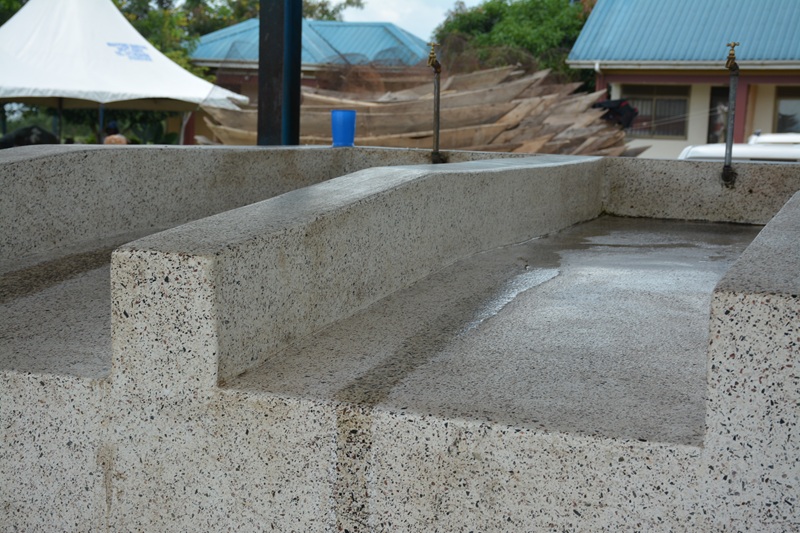
Because of the area’s high water table, flush toilets replaced traditional latrines. A wire mesh fence was built to secure the modern site, curbing widespread theft of fish, nets and boats. A dedicated fish handling and cleaning bay followed, constructed in concrete, fitted with piped water, and finished with terrazzo stone to ensure hygiene and durability.
The Nile Basin Initiative (NBI) NBI supervised Mahyoro’s modernization as part of its coordination of LEAF II at regional level.
Policies and regulations were reinforced to preserve the fish stock with the Government deploying the army to police operations and safeguard the demarcated breeding zones of Lake George, which is located within the Queen Elizabeth National Park and is a Ramsar site of international importance. In addition, the size of nets was standardized to prevent overfishing, while regulations set a minimum boat length of 28 feet.
“This is because smaller boats often capsized, claiming lives,” Ms Atuhaire explains
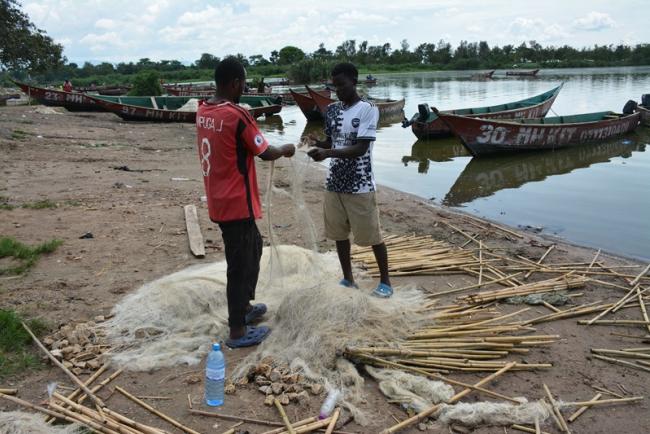
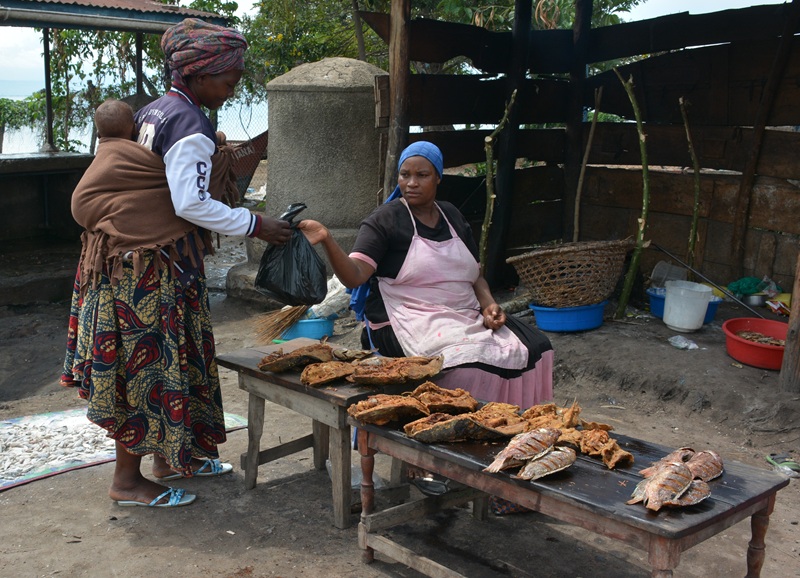
The LEAF II project closed in 2021, yet when 24 officials from the Zambezi Watercourse Commission arrived on an exchange visit with NBI, on 12 March 2026, they found the benefits intact. The fish handling bay – a space measuring just 25 x 70 metres – was pristine and functional. Fishermen quietly sorted their nets on the sand and women displayed smoked tilapia. Boats, now standardised, bore the owners’ telephone numbers. Fish stocks were adequate, with five natural species available, including tilapia and catfish.
“Communities are now trading in clean fish and reaching markets as far as the Democratic Republic of the Congo,” Ms Atuhaire says. “Sanitation has improved tremendously, and the landing site is secure.”
The traders from the Democratic Republic of the Congo arrive early in the morning and wait in Kasese District in Uganda for Mahyoro’s fish, confident in its quality.
A fishing license costs the equivalent of US$40 per year, yet the number of licensed boats has grown to 127, reflecting the surge in business.
Thirty six-year-old Mr Iga Atidu says the fishermen have gained a great deal from the new bay:
“Every kind of money we have has come from this landing site. We have bought land and started other businesses, and all of them are sustained by our fishing through Mayhoro.”
He added: “Most traders are women, and they come daily in throngs. Some buy fish to sell elsewhere; others roast or fry it here. The majority are single mothers supporting families.”
Among them is 43-year-old Ms Asah Nalubega.
“We used to sell fish on the ground, in a run-down shelter,” she recalls. “There were fights because we couldn’t fit. Now we sell on a clean concrete platform where everyone has space. It is roofed, so the rain no longer affects us. We have clean toilets and a place to keep our tarpaulins at the end of the day. We look good and people respect us because we are making money!
“I have a partner,” she adds, “but I pay my children’s school fees. I have five children, the eldest one studies at Makerere University.”
Income from fishing has allowed Ms Nalubega and her friends to branch into other livelihoods, rearing chickens and goats, and producing soap, cakes and chalk. The Government provided 15 groups with starter kits for such enterprises in an additional move to reduce pressure on the lake’s fragile ecosystem. At just 2.4 metres deep and threatened by sedimentation, Lake George requires careful stewardship.
The transformation of women’s incomes is the single largest benefit of the entire project of Mahyoro’s modernization, Mr Moses Mushabe, the Kitagwenda District Speaker, states.
To sustain these gains, the community established a facility management committee, drawing members from the three neighboring districts. Fishermen contribute a fee, helping to maintain the toilets, the handling bay, the fence, and the water supply.
The only aspect that did not work are the fish roasting cabinets, whose technology turned out to require too much firewood. In addition, the metallic covers got extremely hot and unmanageable. The community found themselves returning to their old roasting racks, a system that is unsustainable for consistently high incomes.
The Government has planned to address this and other matters, including watershed management, under LEAF III, which NBI, the Democratic Republic of Congo and Uganda have designed to build on the shared benefits generated under LEAF II.
For now though, as morning breaks over the lake, the rhythm of the landing site ensues: boats arriving, traders gathering, fish changing hands. Only now it unfolds in a place that has changed — for women, for George, and for the Nile.
LEAF II is one of 134 projects worth US$6.5 billion that NBI has prepared since its inception in 1999. Through its Nile Equatorial Lakes Subsidiary Action Program (NELSAP), NBI identified, prepared the project and coordinated its implementation regionally in DR Congo and Uganda, including supervising the modernization of eight integrated fish landing sites in addition to Mahyoro. Using additional resources from the Global Environment Fund and in collaboration with the two governments, NBI delivered harmonized fisheries policies, a cooperative framework for joint management of Lakes Albert and Edward and the improved beach management institutional framework for basin management. In addition, a cooperative agreement for joint management was signed and four surveillance boats and a mobile laboratory were delivered.
Story and Images – Lydia Wamala