Abstract
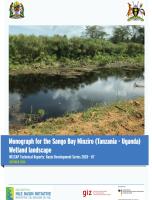
The Nile Equatorial Lakes Subsidiary Action Program (NELSAP) has initiated an action research project to increase the knowledge base and strengthen the capacity to integrate green infrastructure in river basin planning in three transboundary wetlands: Semliki Delta (DRC-Uganda), Sango Bay-Minziro (Tanzania Uganda) and Sio-Siteko (Kenya-Uganda). This project builds upon existing and previous plans and programs and aims to pave the way and create drivers to improve governance, promote conservation and sustainable livelihoods in the Sango Bay-Minziro wetland landscape which directly or indirectly involve the wetlands. This Wetland Monograph presents a detailed study of the physical context, biodiversity and ecosystems, policies and institutions, socio-economics and livelihoods, and social dimensions of the Sango Bay-Minziro wetland landscape. In addition, it identifies the main challenges the wetland landscape faces and on which to develop successful management plans and investment portfolios. The Sango Bay-Minziro wetlands are of high bio-geographic importance because they are located in the transition zone between the East and West African vegetation zones. They are home to rare and endemic forest swamp tree species, over 300 species of birds, endangered mammals and various amphibians, fish and reptiles. The area plays an important role in supporting ecosystem processes and regulating the dynamics of the hydrological system, reducing peak flow and contamination, and storing potable water. The main challenges in Sango Bay-Minziro include the destruction of wetlands, over-exploitation of wetland resources, and unsustainable land use practices that enhance ecosystem degradation and soil erosion. The main causes underlying these challenges include a high population growth rate (2.04% per year), widespread poverty, weak institutional capacity, a lack of awareness, and climate change. An additional threat the wetlands faces is the possibility of oil exploitation and acceleration of land use change. Water resources are likely to be increasingly strained in the future due to changing climatic and socio-economic conditions of the wider Sango Bay-Minziro and its contributing rivers and streams. Wetlands are an effective sink for carbon, playing a key role in buffering the effects of climate change, thereby supporting climate adaptation and resiliency. Therefore, the Sango Bay-Minziro wetland landscape needs better protection from human disturbance and climatic changes to protect the ecosystem and local livelihoods. In order to develop successful and sustainable management and investment plans, it is crucial to understand the environmental and socio-economic system of the wetland landscape and the main threats it faces. The first step and cornerstone of this action plan is this Wetland Monograph, which serves as the baseline and reference for the Sango Bay-Minziro Wetland Management and Conservation Investment plans.