ENTRO Welcomes NBI Leadership, Highlights ‘One NBI, Three Centers’ Philosophy”
ENTRO Welcomes NBI Leadership, Highlights ‘One NBI, Three Centers’ Philosophy”
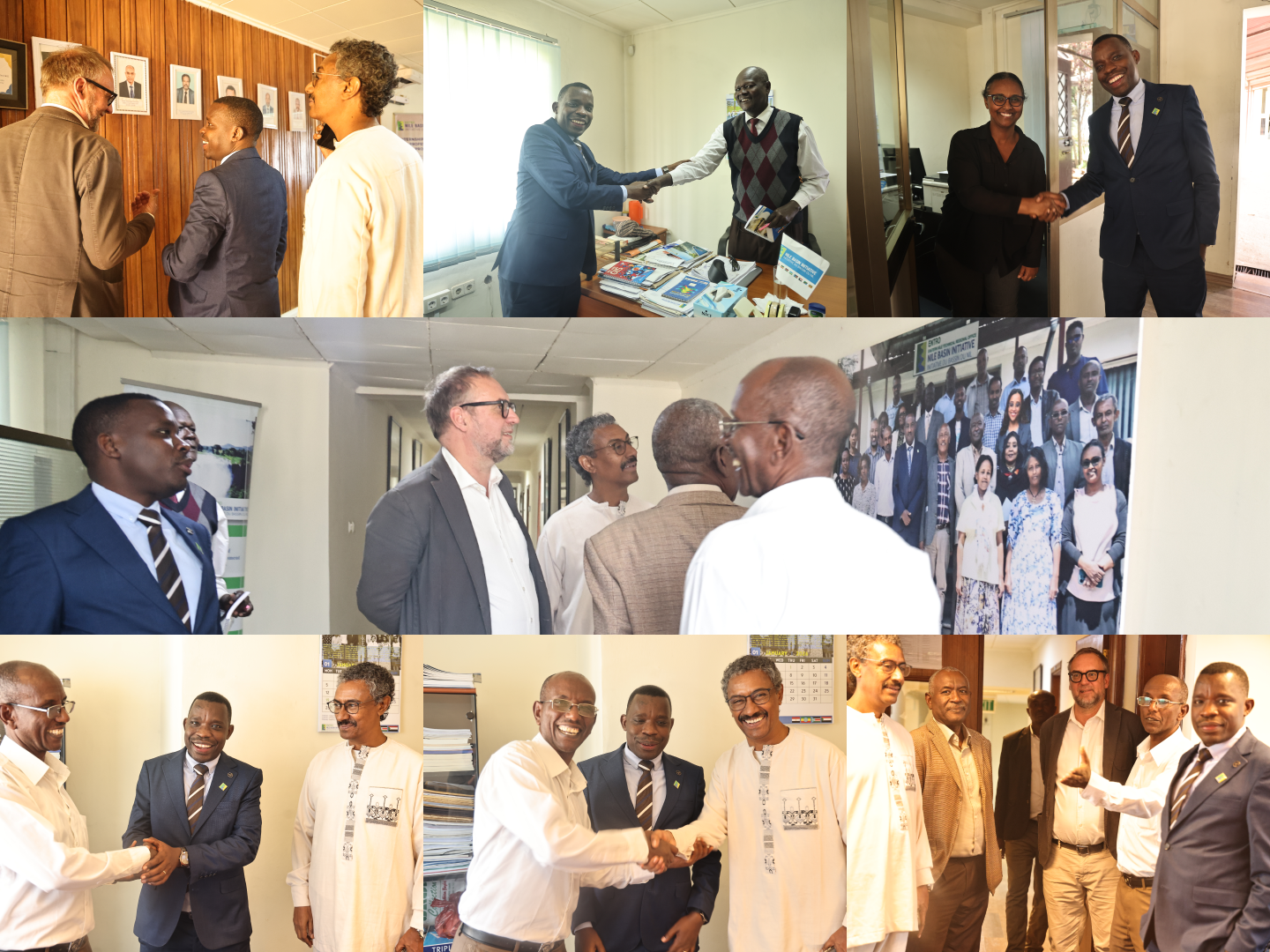
Eastern Nile Technical Regional Office (ENTRO) Acting Executive Director Eng. Teshome Atenafie Welcomed the new Nile Basin Initiative (NBI) ED, Dr. Eng. Nestor Niyonzima, the Senior Advisor former NBI ED Dr. Dr. Florence Grace Adongo, Deputy ED Dr. Abraha Adugna Ashenafi and Dr. Malte Grossmann a senior official with the German Techni9cal Cooperation (GIZ) on the official visit to ENTRO. On their arrival, Eng. Teshome invited the guests to explore ENTRO offices and facilities to familiarize themselves with the premises, offices allocation and actively engage in appreciating the establishment and a need for mutual support to ensure the continued success and proper functioning of the organization as originally envisioned since its inception in 1999 and full establishment in 2001.
Eng. Teshome on his welcoming remark emphasizes on the continues collaboration and financial support of the three NBI Centers with “One NBI three Centers” philosophy let us work together to sustain and enhance our system.
ENTRO Acting Executive Director said that “The organization is currently facing financial pressure due to limited country contributions and reduced donor support, largely because of the fragile situation in the Eastern Nile region and sensitivities around hydro politics. To address this, all NBI Centers have agreed to mobilize resources collectively under a unified “One NBI three Centers” approach. This coordinated model has been used successfully for the past five years in implementing NCCR and is now being applied to RCRP project. Given the current challenges, collaboration and mitigation measures, including through partners and the member countries are essential to navigate this critical period.
ENTRO Acting ED invited the NBI ED, Dr. Eng. Nestor Niyonzima to give remarks. The new NBI ED expressed his appreciation for the warm welcome and noted that this was his first visit in his new role to ENTRO. He acknowledged the center’s strong performance and dedication in sustaining and strengthening the institution’s role. He commended the progress made, particularly within the investment program portfolio, which includes several important projects. He emphasized the importance of continuing this momentum to ensure that institutional efforts translate into tangible benefits for the people and present in the upcoming governance meeting.
He states that “We value your center greatly and recognize the hard work you are doing to sustain and strengthen the institution. We are pleased to see progress being made, particularly in the investment program portfolio, which includes several important investment preparation projects. We hope that till the upcoming governance meeting, we can continue advancing our work and ensure that our efforts bring tangible benefits to our people.
We are aware of the challenges you face, especially regarding resource mobilization and country contributions. These are shared concerns across the NBI institutional establishment. Without sufficient resources, it is difficult to move forward. However, we are encouraged by recent discussions and commitments aimed at improving financial contributions.
Finally, he highlighted the center’s impressive facilities and suggested exploring opportunities to utilize them more strategically—such as hosting meetings and events—to generate additional income and enhance sustainability. He concluded by thanking the host, Eng. Teshome, ENTRO Acting ED, and all the staff members for their hospitality and reaffirmed the commitment to continued coordination, collaboration and deeper engagement into the future.
Following ED, the outgoing NBI ED, Dr. Florence Grace Adongo delivered a farewell address, expressing gratitude to ENTRO Acting ED and the staff for their collaboration and dedication over the past two years, noting that despite operating in a highly strained and fragile environment, the institution continued to deliver results with great performance which contributed to the whole NBI success. She also reflected on the challenging start of her tenure, when many development partners were hesitant to engage, and highlighted the institution’s turnaround, including a satisfactory performance rating on the NCCR implementation despite difficult circumstances.
Dr. Florence in her speech “noted the importance of collective effort, governance engagement, and political-level support in achieving these successes. Encouraging developments were reported from the Thirty Third Council of Ministers Meeting in Bujumbura, where continued support from key partners—including the World Bank, BMZ, EU, and African Development Bank—were requested and responses indicated a positive shift toward renewed engagement. Despite the challenges, NBI remains highly regarded in regional and global forums as an exemplary model of transboundary cooperation—an achievement rooted in collective responsibility and cooperation among member states.”
She urged staff to continue pursuing the institution’s vision despite ongoing hydro political challenges. Special appreciation was given to Dr. Malte for his resilience and support, and she acknowledged ongoing commitments from BMZ through GIZ for transboundary cooperation. She concluded by thanking the team and wishing the institution continued success.
The Deputy ED, Dr. Abraha Adugna Ashenafi praised ENTRO’s contributions in the Eastern Nile, including hydrological modeling, dam safety, and other regional projects. He stressed the importance of continued partner support, highlighting successful initiatives, and acknowledged commitments from member countries to support ENTRO’s activities. He commended the team and emphasized the “One Nile Basin” philosophy for ongoing collaboration.
DED said that “Significant achievements were noted in dam safety, including the establishment of a dedicated Dam Safety Center. This center not only serves the Nile Basin but has a broader African focus, with potential to generate revenue through services provided to dams’ operators.”
Dr. Abraha informed that Ethiopia and South Sudan have pledged to Pay the Country Contribution which is positive news for both ENTRO and NBI.
On his part, Dr. Malte Grossmann, GIZ Head of Transboundary Water Cooperation in the Nile Basin Project, praised ENTRO’s work, highlighted successful projects like the dam safety center, and encouraged focusing on flagship initiatives, involving more than a country, to attract funding. He emphasized leveraging past experiences from NBI and NELSAP, using the BIP strategically.
Dr. Malte said that “I encourage ENTRO to strategically focus on a few flagship projects from the BIP, which are basin-wide transboundary focused approaches, to attract funding from partner institutions and organizations. These initiatives can scale and demonstrate value, helping ENTRO regain visibility as an investment provider in the basin. I also want to acknowledge the German government’s support, which sets an example for other partners, including the World Bank and EU. Although funding is small, it has been strategically focused, and ENTRO can use the Basin Investment Program (BIP) strategically, to secure additional support” .
The Regional Climate Resilience Program Coordinator (RCRP) Project Lead Technical Specialist Eng. Isaac Liabwel highlighted the continental collaboration across Eastern and Southern Africa, with South Sudan as the main participant and Ethiopia, Sudan and Uganda involved regionally through ENTRO and NELSAP-CU. Key project activities include flood management interventions feasibility studies and hydrological monitoring, supported by a special internship program by ENTRO to build local expertise. He noted strong prospects for upcoming Regional Hydromet, workshop, tentatively scheduled for Sept/Oct 2026 by the World Bank and anticipated long-term engagement in the sector, including through the internship program.

Eng. Isaac stated that “Under RCRP, at regional level, NBI centers support countries like South Sudan, with Ethiopia, Tanzania, and Uganda also envisaged to participate in the second phase. Currently, South Sudan is the primary participant, with Ethiopia, Sudan and Uganda engaged in small regional components. Projects include interventions along the Yabus River, linking South Sudan, Ethiopia, and Sudan; BAS select areas, involving Ethiopia and South Sudan; and Unyama, between South Sudan and Uganda.”
Finally, the regional finance Administration Head, Mr. Elsadiq Goda congratulated the new ED on his new role.
He said that “It will be challenging but starting with a major governance meeting in December last year, followed by a large activity of the Regional Nile Day, will give you a strong introduction to the environment and dynamics of NBI. The staff are fully engaged—even over weekends—and everyone in the centers works hand in hand toward a common goal. I wish you a successful and rewarding time with NBI.I also extend my best wishes to the outgoing ED in her new chapter.”
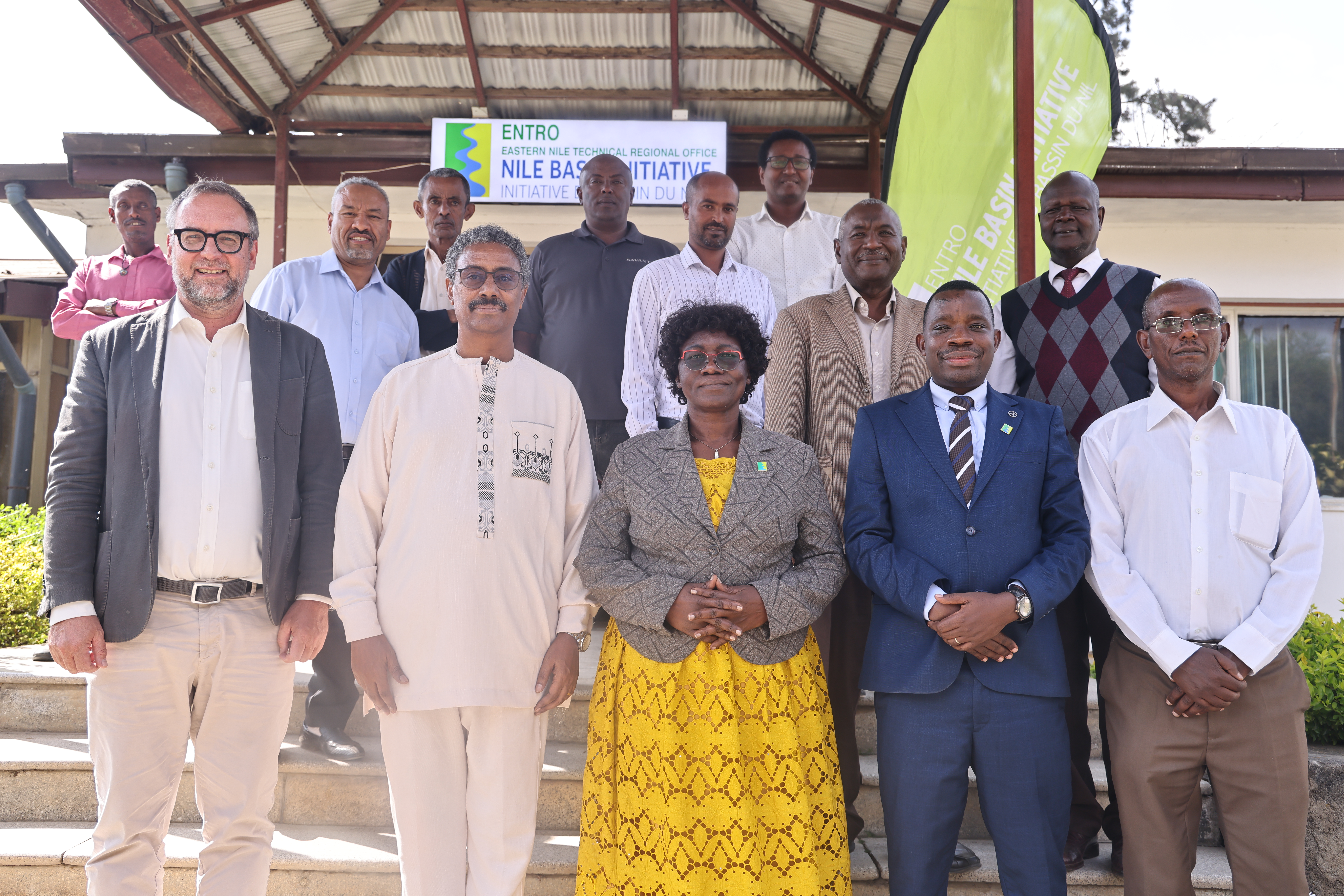
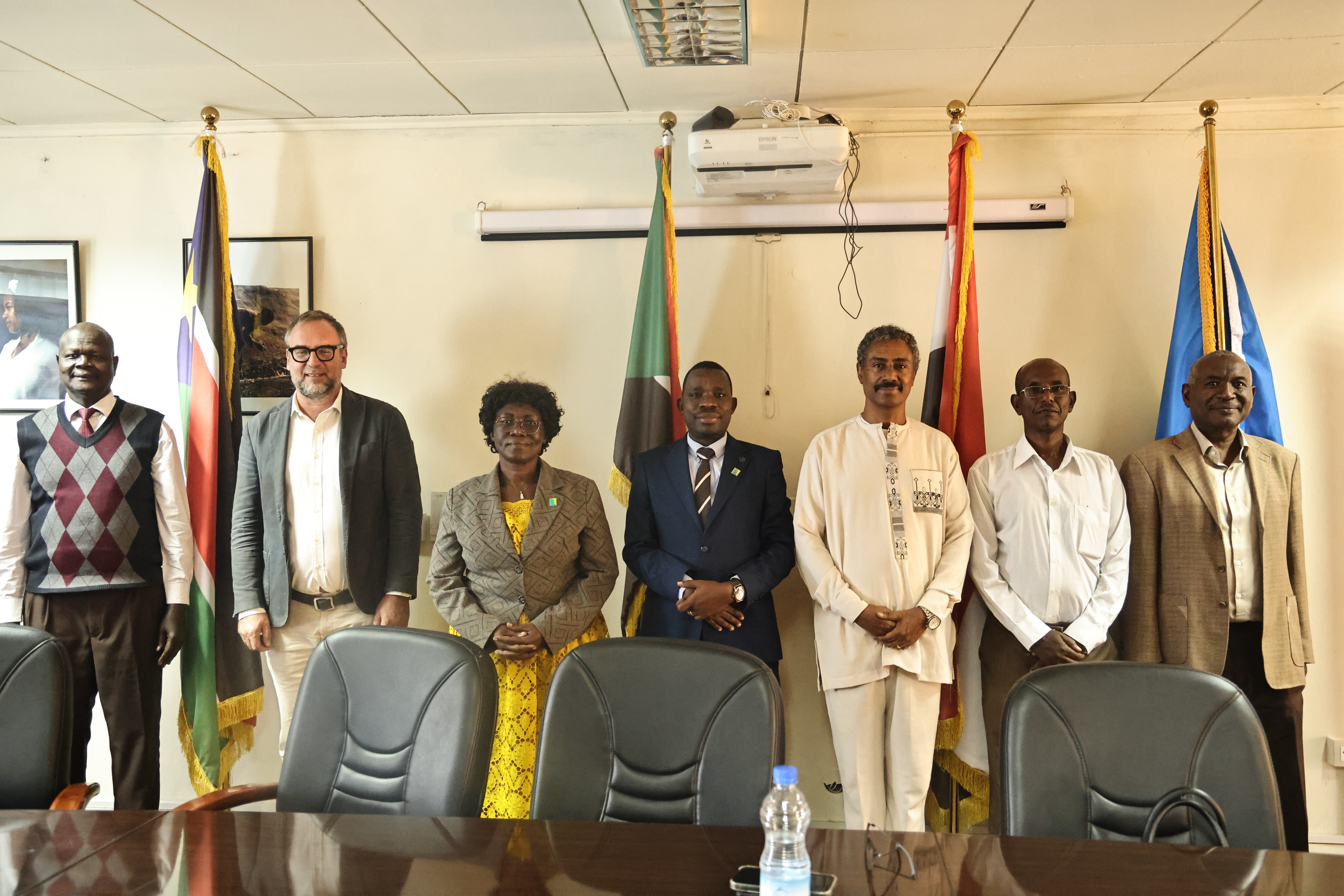
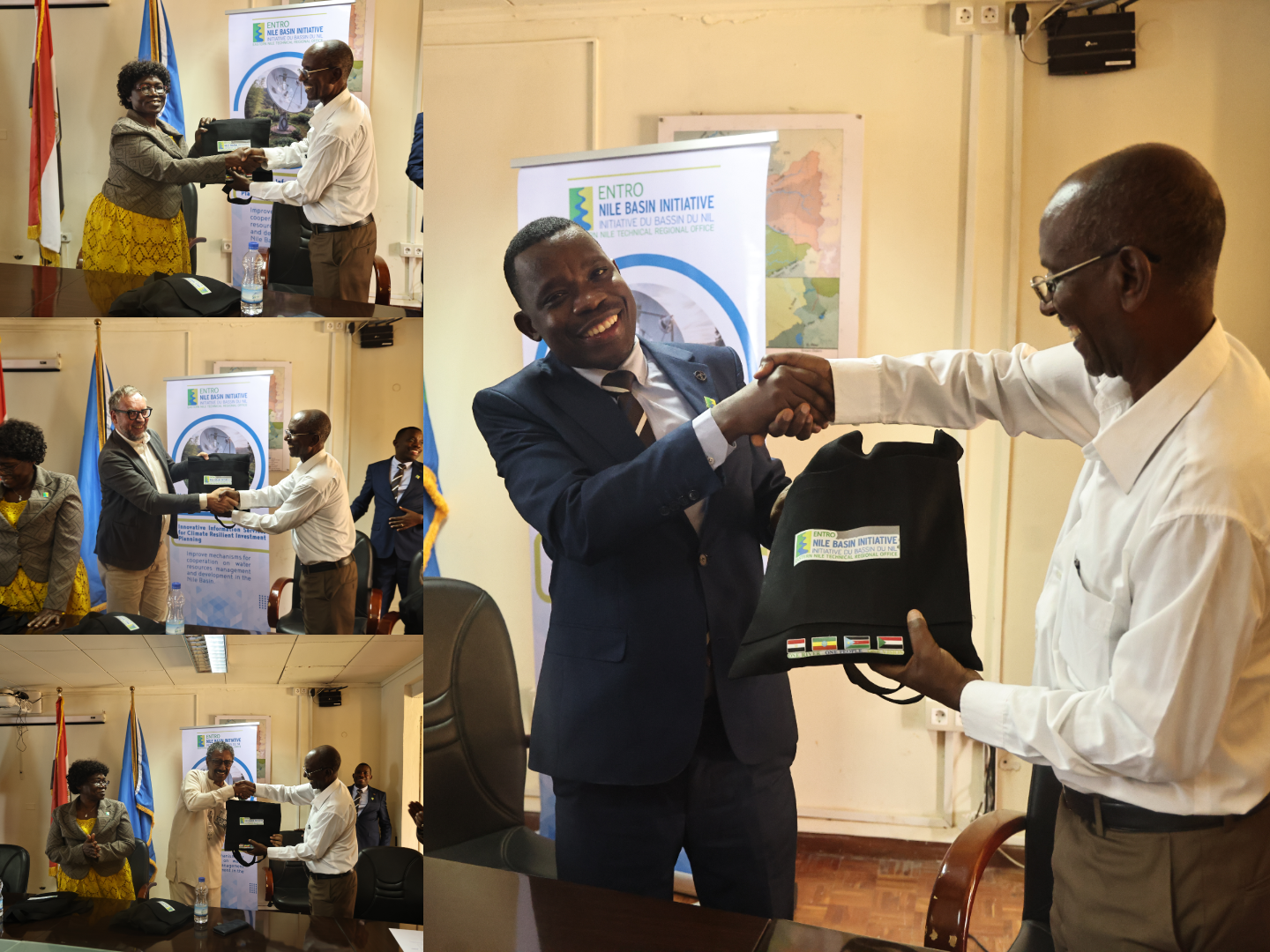
The official visit concluded with the presentation of publication souvenirs to welcome the new ED and bid farewell to the outgoing ED, followed by a group photo session.