Angololo Project Earns Global Infrastructure Certification
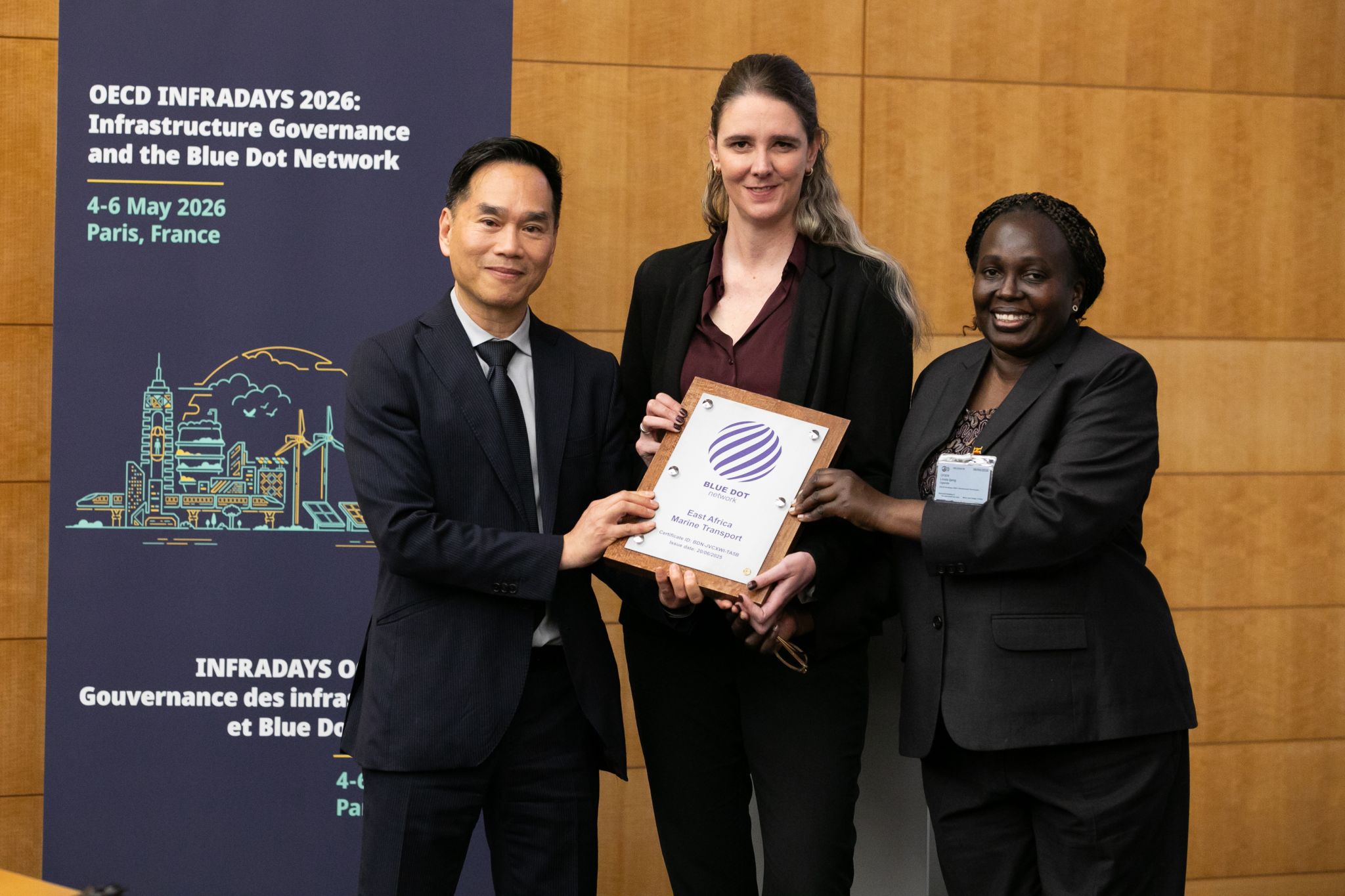
The Angololo Water Resources Development Project, a joint Kenya–Uganda initiative coordinated by the Nile Equatorial Lakes Subsidiary Action Program Coordination Unit (NELSAP-CU), received certification under the Blue Dot Network (BDN), an international framework that recognizes high quality, sustainable, and transparent infrastructure projects.
The certification was announced during the OECD InfraDays held in Paris, France, where governments, development finance institutions, investors, and infrastructure experts gathered to discuss global infrastructure priorities and investment opportunities. Angololo was among only five projects worldwide certified in this round.
For the Nile Basin region, this recognition marks an important milestone for transboundary infrastructure development and reflects growing international confidence in cooperative regional investments.
The Angololo Water Resources Development Project is located along the Kenya–Uganda border within the Sio-Malaba-Malakisi River Basin. The project is designed to improve water security, strengthen climate resilience, support food production, expand access to clean energy, and improve livelihoods for communities in both countries.
The project includes irrigation infrastructure for smallholder farmers, water supply systems, watershed restoration activities, and a mini hydropower component. Together, these investments are intended to address some of the most pressing challenges facing communities in the area, including unreliable rainfall, land degradation, limited energy access, and increasing climate variability.
Once implemented, the project is expected to support irrigation on thousands of hectares of farmland, improve water access for surrounding communities, strengthen watershed management, and contribute to local economic development.
The certification by the Blue Dot Network confirms that the project has been developed in line with internationally recognized standards for quality infrastructure. These standards cover areas such as environmental sustainability, transparency, resilience, financial viability, social safeguards, and long-term development impact.
Established in 2019, the Blue Dot Network is jointly led by the United States, Japan, and Australia in partnership with the OECD. The initiative promotes infrastructure projects that meet high standards of openness, sustainability, and accountability.
For Angololo, the certification strengthens the project’s credibility as it advances discussions with development partners, financiers, and potential investors. In an increasingly competitive global financing environment, internationally recognized certification helps demonstrate that the project has undergone rigorous preparation and aligns with global best practices.
The recognition also highlights the value of regional cooperation in addressing shared development challenges. Transboundary projects often require sustained coordination between governments, technical institutions, and local stakeholders. The successful preparation of Angololo reflects years of collaboration between the governments of Kenya and Uganda, supported by NELSAP-CU under the Nile Basin Initiative framework.
Beyond infrastructure development, the project represents a broader approach to cooperative water resources management in the Nile Basin. By combining water, energy, agriculture, and environmental objectives within a single investment framework, the project demonstrates how shared natural resources can support regional integration and local development simultaneously.
Angololo’s certification comes at a time when countries across the Nile Basin are seeking practical solutions to climate pressures, growing populations, and increasing demand for water, food, and energy. Investments that strengthen resilience while promoting regional cooperation are becoming increasingly important for sustainable development across the region.
The other projects certified in this round included infrastructure initiatives from Brazil, Egypt, South Korea, and the East African region, reflecting growing international interest in sustainable and resilient infrastructure across both developed and developing economies.
While certification is an important achievement, the focus now shifts toward mobilizing financing and moving the project toward implementation. Continued cooperation between Kenya and Uganda, engagement with development partners, and sustained institutional coordination will remain essential as the project progresses to the next stage.
NELSAP-CU expressed appreciation to the governments of Kenya and Uganda, the Nile Basin Initiative, the Blue Dot Network, the OECD, development partners, technical experts, and local stakeholders who have contributed to advancing the project to this milestone.
As countries in the Nile Basin continue to pursue shared solutions to regional development challenges, the Angololo Project stands as an example of how cooperative infrastructure can support climate resilience, economic growth, and long-term sustainability across borders.